
A career built on curiosity
 Learning to lead
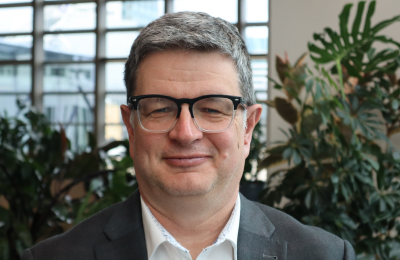
Colin’s first significant people leadership role was as the Manager of the Health section at the Treasury, more than 20 years ago. The transition was challenging because it involved several shifts at once: moving from the private sector, joining a central agency and leading in an unfamiliar policy area.
But not knowing the health sector well turned out to be a strength. It stopped him from becoming the chief analyst and forced him to rely on the expertise of his team. Instead of doing the work himself, he learned to step back. This experience helped him avoid a common trap for new managers and shaped his approach to leadership early on.
“I knew a little but not a lot so I couldn’t be the chief analyst. It forced me to rely on the team to do the work. It also helped me keep out of the detail,” Colin admits.
Strong support also mattered. Colin was surrounded by capable peers and a really good manager. Looking back, he sees how much that support made the transition easier and how important it is to remember what early leadership roles feel like.
Understanding leadership through context
As Colin moved through more senior roles, he became increasingly aware of how much context shapes leadership. He’s noticed that often senior leaders have access to information and discussions that others do not.
“I do have to remind myself when interacting with managers that they have very different context and information. You’ve got layers above you that tell you stuff but it’s just not the same as being in those meetings when you’re a deputy chief executive or chief executive.”
He regularly reminds himself to step back and consider the context others are working within. As managers lower in the organisation are usually focused more on delivery and the immediate needs of their teams.
Curiosity as a driver of growth
Colin has had a deep, varied career generally in data or analytically focused roles, where he’s enjoyed managing experts. In the last 15 years he’s been in senior roles across Treasury, Ministry of Justice, Price Waterhouse Coopers, Ministry of Housing and Urban Development and Stats NZ.
The motivation behind these moves, Colin would describe as curiosity. He describes each major career move as a question he wanted to answer. Could he lead? Could he lead in a different organisation? Could he lead across agencies? Could he succeed in the private sector? Could he be a chief executive?
There was no grand career plan. Instead, each role lasted around 5 to 6 years, long enough to master the role and do well in it before moving on to a new challenge.
Colin believes he’s been lucky to work with a wide range of leaders, in a range of environment that’s continued to build his capability. There were no sudden ‘aha’ moments, just an accumulation of experiences across different organisations and leadership environments that he now draws on.
“Each time you bring past experience and refine it, or combine it to try and be a good leader,” says Colin.
“I do have to remind myself when interacting with managers that they have very different context and information. You’ve got layers above you that tell you stuff but it’s just not the same as being in those meetings when you’re a deputy chief executive or chief executive.”
Leading people in different systems
Having worked across the public and private sectors, Colin sees leadership as fundamentally about leading people to achieve outcomes. While the core of people leadership stays the same, the context changes everything.
Public and private sector environments have different risk profiles, decision-making processes and measures of success. The private sector often has clearer metrics and stronger commercial discipline, while the public sector operates with more stakeholders and constraints. Each setting requires different skills and ways of thinking, and leaders must adapt to be effective.
Colin brought several practices from the private sector into his public leadership roles. These include a strong focus on customer needs, structured delivery, consistent ways of working, quality assurance and efficient use of time. Consulting experience reinforced the importance of repeatable processes, pace and accountability.
A committed leader
Now, as chief executive, Colin has come in with a strong focus to make sure the organisation is set up to deliver on the things it’s committed to deliver. He also wants to consistently deliver on the new products that they are looking at.
At the end of the year, Colin says he’ll be pretty happy, if he’s got the right governance, infrastructure and capability in place and can point to multiple key deliverables his team has achieved. He remains cautious about declaring success too early and recognises that understanding complex programmes takes time. That humility reflects his broader view of leadership, that it is never finished and always shaped by the next challenge.
This interview featured in our June issue of our LDC newsletter. Previous interviews with senior public sector leaders include Carolyn Tremain, Brian Roche, Paul James and Gráinne Moss. Sent every two months, the LDC newsletter includes leadership development opportunities, resources and interviews with inspiring leaders. You can subscribe here.